Back
Legal Tech Agenda: The Harbinger of Home for Legal Tech Transformation
Why most legal tech roadmaps fail - and how to build one that works.
6 minutes • 23 Dec 25
Start With the Right Definition
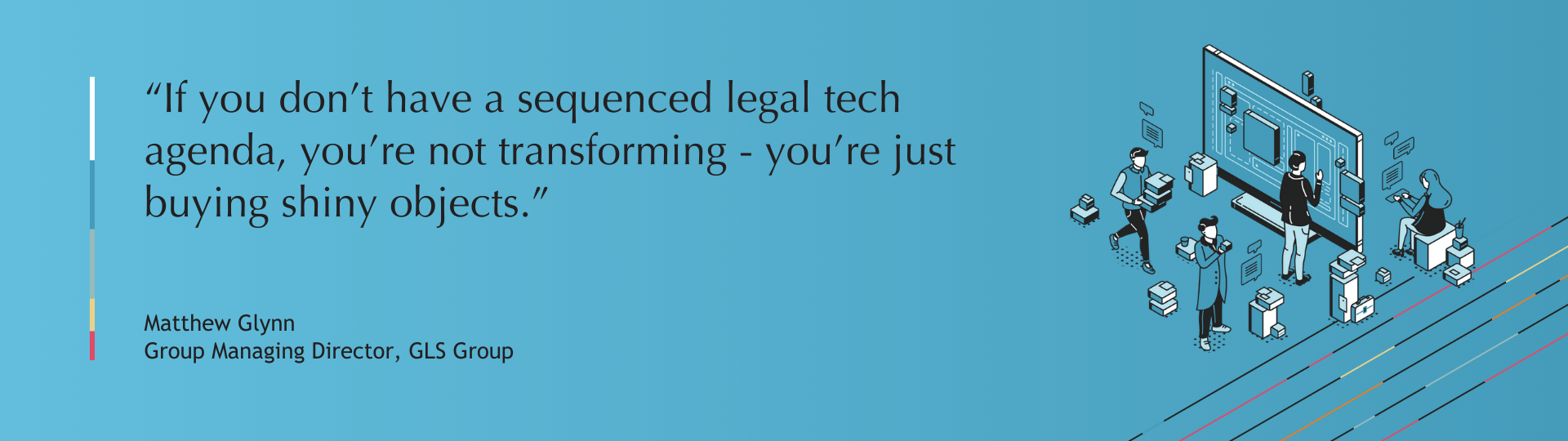
Before you even think about building a legal tech agenda, you need to understand what legal tech actually is. At GLS, we define legal tech as:
“Anything that improves the unit of productivity per unit of lawyer effort.”
That’s it. No hype. No jargon. No chasing shiny AI toys. Legal tech is about efficiency - tools, processes, and platforms that make lawyers more productive without increasing effort. If it doesn’t move that needle, it’s not legal tech.
This definition changes everything. It forces you to focus on impact, not novelty. It makes you ask:
◼️Does this tool reduce friction?
◼️Does it increase output per lawyer hour?
◼️Does it integrate with what we already have?
If the answer is no, it doesn’t belong on your agenda.
Scour the Landscape - Through This Lens
The legal tech market is fragmented, noisy, and confusing. Categories include CLMS, matter management, e-discovery, compliance, document automation, and AI analytics. Most vendors originate in North America, but innovation hubs are emerging globally.
Here’s the problem: in-house lawyers don’t recognise half of what’s out there. And why would they? This is a new domain. That’s why GLS built the Legal Operations Centre - to give you curated insight into the global legal tech landscape and the core knowledge assets so that you can navigate it safely.
Because if you don’t understand the terrain, you can’t build a roadmap. And if you don’t apply the right lens - our definition - you’ll waste time and money chasing features that don’t improve productivity.
No Major Implementations Until the Basics Are Done
This is where most legal tech agendas go wrong: they start with big-ticket implementations - CLMS, enterprise platforms - before the basics are in place – usually because of internal cries from the CTO, CEO and CFO – give us cost savings!!
Here’s the truth: you’re at least 12 months away from any major implementation if you haven’t done the groundwork. That means:
◼️Current Status Assessment: building a data based view of your in-house legal department – you have to recognise what you are trying to improve
◼️Process Mapping: Know your workflows, especially APEX processes.
◼️Platform Audit: Understand your existing tech environment and integration constraints.
◼️Offline Build Out: everything must be optimised offline before you think about add tech into the mix
◼️Risk Calibration: Align tech priorities with compliance obligations and business appetite.
Skip this, and you’re building on sand.
Understand Your Existing Tech Environment
Legal will never dictate your organisation’s tech stack. IT owns the architecture. Finance owns the budget. Legal is a stakeholder, not the architect.
That means your roadmap must prioritise compatibility with existing enterprise platforms. Avoid closed ecosystems - they lock you in and create integration nightmares.
Spend 20 times more effort measuring your ecosystem than you do looking at vendor solutions. If you don’t know what you’re plugging into, you’re gambling with millions.
Reject “All-in-One” Systems
The industry loves to pitch “all-in-one” platforms - the mythical unicorn that does everything. Vendors promise simplicity, but the reality is brutal:
◼️High failure profiles: Complexity kills adoption.
◼️Integration nightmares: They rarely play well with enterprise systems.
◼️Cost overruns: Implementation is slow, expensive, and painful.
◼️Redundancy: ask “Apple” about the viability of a closed operating system – no one could talk to their PCs.
The winning “all-in-one” solution hasn’t emerged yet - and it may never. The future is modular. Apps, not monoliths.
Start Small, Start Safe
Once the low-tech preparation work is done, start with small, safe, app-based implementations. Modular apps that sit on your existing platforms deliver agility, scalability, and cost-efficiency.
This approach lets you:
◼️Test adoption without risking millions.
◼️Deliver quick wins that build confidence.
◼️Scale intelligently as maturity grows.
The Golden Rule: Offline Before Online
If a process doesn’t work offline, it won’t work online. Automating chaos doesn’t make it better - it makes it faster and more expensive.
Before you digitise, optimise. Fix the engine before you add the turbocharger. It is as simple as that.
Joint Ownership Is Non-Negotiable
Here’s another reason roadmaps fail: hands-off thinking. Legal says, “Leave it to IT.” IT says, “Leave it to legal.” Result? Disaster.
Your Legal Tech Agenda must make joint ownership a design principle. Legal and IT must co-own every initiative. Procurement and finance must be engaged early. There is no outsourcing responsibility.
Transformation isn’t passive. It’s leadership. And leadership means owning the process - even if it’s outside your comfort zone.
The Catch-22 Nobody Talks About
Just as you don’t know tech, IT doesn’t know law. They don’t understand your workflows, your compliance obligations, or your risk profile. So when legal and IT collide on tech projects, it’s a recipe for confusion.
Who fixes this? You do. Lawyers need to tool up, acquire enough tech expertise to lead intelligently, and - just as we do on every major project - project manage the hell out of it. Bring order to chaos. Define requirements. Align stakeholders.
This doesn’t mean you become the IT department – you need just enough expertise to ensure that you give IT what it needs to be successful and to prevent them from driving off the road.
The Harbinger of Home
This article is your wake-up call. If you’re trying to prepare a legal tech agenda, stop thinking about vendors and start thinking about sequencing, integration, and governance.
Your roadmap isn’t a shopping list - it’s a strategy. It’s the difference between transformation success and expensive disappointment.
GLS Observations That Must Shape Your Agenda
◼️Legal tech = productivity: Anything that improves output per lawyer hour.
◼️Legal will never dictate tech strategy: Integration is non-negotiable.
◼️Closed ecosystems fail: Avoid them.
◼️Apps win: Modular, scalable, enterprise-friendly.
◼️Measure your ecosystem: Spend 20x more time here than on vendor demos.
◼️Offline first: Fix processes before digitising.
◼️Joint ownership: Legal + IT + finance + procurement = success.
◼️Start small: Safe, app-based implementations after groundwork.
◼️Reject monoliths: “All-in-one” is a myth.
◼️Sequence intelligently: Align with risk, maturity, and business priorities
The Bottom Line
If you think building a legal tech agenda is about picking vendors, you’re wrong. It’s about sequencing, integration, and governance. It’s about fixing the engine before adding horsepower.
Spend more time measuring your ecosystem than you do shopping for tech. Reject monoliths. Start small. Make joint ownership non-negotiable. And remember: if it doesn’t work offline, it won’t work online.
GLS gives you the clarity, frameworks, and market intelligence to build a roadmap that works - not a shopping list that fails.
Ready to Build Your Agenda?
Knowledge isn’t optional - it’s the shortcut to success. Let GLS help you build the agenda that delivers.
Key Tips & Observations: Legal Tech Agenda
- Single source of truth: a legal tech agenda prevents fragmented, ad-hoc decision-making.
- Strategic anchor: the agenda connects technology choices to legal strategy and outcomes.
- Priority discipline: not every problem deserves a tech solution — sequencing matters.
- Foundation dependent: intake, process, data and policy maturity determine success.
- Change realism: legal teams can only absorb limited transformation at once.
- Use-case clarity: every tool must map to a defined operational problem.
- Roadmap thinking: legal tech adoption is a journey, not a shopping exercise.
- Governance signal: a clear agenda demonstrates operational maturity to the business.
- Integration awareness: systems must coexist, not compete, within the tech stack.
- Vendor containment: agendas prevent vendors from setting the transformation narrative.
- Investment logic: tech spend must be justified through time, cost or risk impact.
- Adoption focus: value is created by use, not by licence ownership.
- Future readiness: a good agenda prepares legal for what comes next, not just now.
- Credibility builder: structured agendas build confidence with finance and leadership.
- Transformation compass: without an agenda, legal tech transformation drifts.

The GLS Legal Operations Centre
Register to access your complimentary Day 1 Resource Stack packed with legal team performance resources.

GLS Ultimate Guide To Legal Operations
Download this and read it thoroughly and regularly. It is a wonderful transformation companion.
Book A No-Obligation Consultation
If you would like discuss your legal transformation needs, please book a 30 minute free consultation with us.

GLS Legal Transformation Boot Camp
Our hugely successful, 10-week long, email-based boot camp on how to effectively transform your legal team.